27 September 2025
5 Signs Your AC Needs Immediate Service
Ignoring these warning signs could turn a minor AC fault into a costly compressor failure. Here's what to watch for.
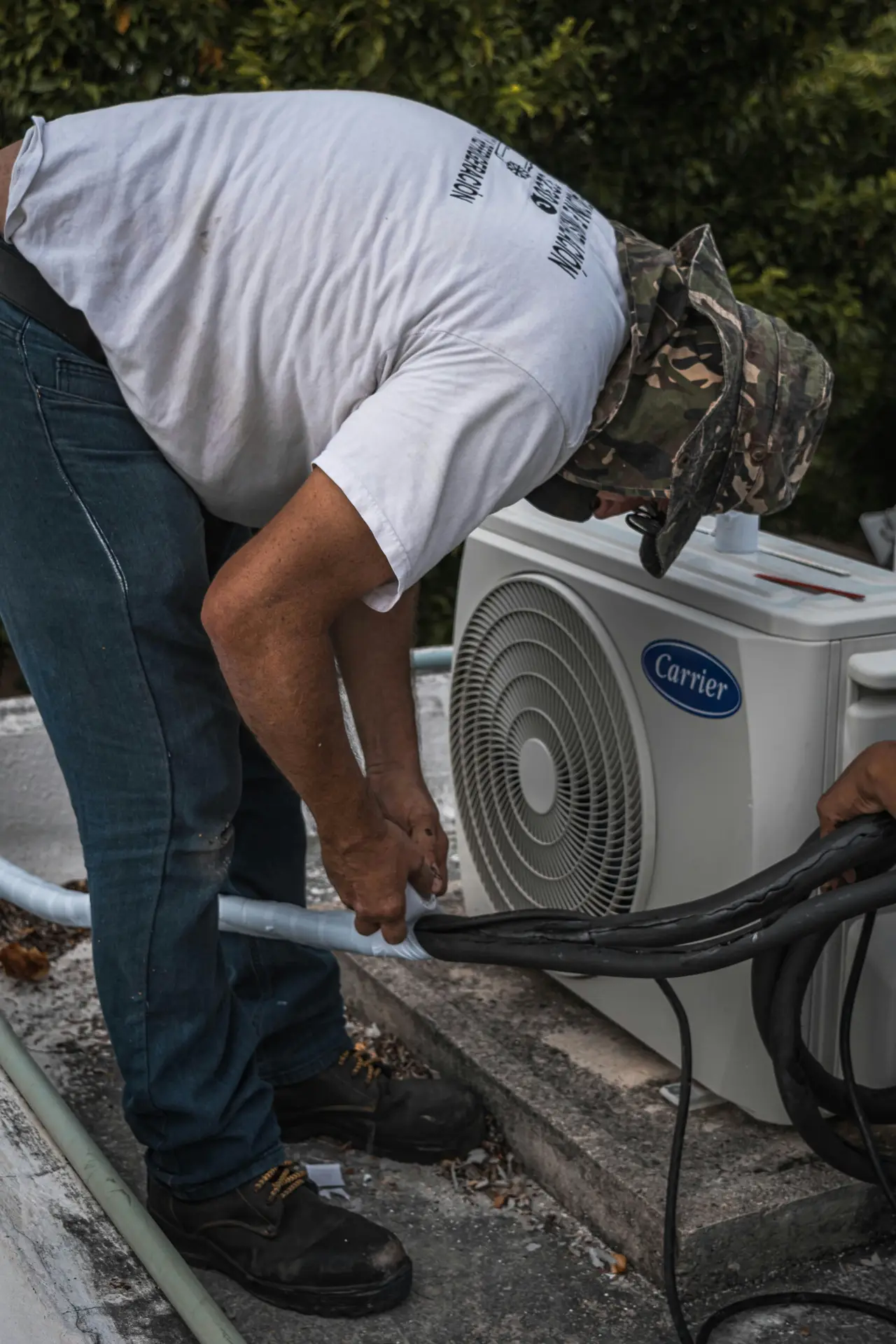
Most AC failures do not start as total failures. They start as smaller warning signs that are easy to dismiss for a few days or a few weeks. By the time the unit stops cooling completely, the repair is often slower, more expensive, and more disruptive than it needed to be.
In Kerala, that risk is even higher because AC systems work in a harsher pattern than many owners realise. Long humid seasons, salt-heavy coastal air in some areas, dusty condenser exposure, and extended daily run times all increase the chances that a small service issue will turn into a bigger fault if it is ignored.
The five warning signs below are the ones most worth acting on early.
1. Warm air from the indoor unit
If the AC is running but the room is not cooling, do not assume it only needs "a bit of gas". In normal operation, refrigerant does not get used up like fuel. If the charge is low, there is usually a leak or a serious performance problem somewhere in the circuit.
In practical terms, warm air usually points to one of these:
- low refrigerant due to a leak
- compressor not starting properly
- condenser coil heavily choked
- reversing-valve or PCB issues in some systems
- indoor airflow collapse because of dirt or blower problems
Why this matters
An AC operating with low refrigerant can keep running while the compressor is under abnormal stress. That is how a modest leak becomes a compressor failure. On many residential and light commercial systems, the difference between an early service visit and a late-stage compressor replacement can be the difference between a repair in the low thousands and a bill that goes well into five figures.
A useful working rule
If the set temperature is 24 C and the unit has been running for 20 to 30 minutes in a closed room, you should feel clearly cool air at the supply. If the airflow feels only mildly cool or room-neutral, it deserves a same-day or next-day check.
2. New sounds during start-up or running
A healthy AC should be fairly quiet. You may hear fan movement, a soft compressor start, and normal airflow. What you should not hear is grinding, scraping, repeated clicking, harsh buzzing, or high-pitched squealing.
The sound itself often narrows the problem:
- repeated clicking can mean a weak capacitor, contactor issue, or relay problem
- buzzing can point to voltage trouble, compressor strain, or loose electrical parts
- grinding or scraping often means fan-motor bearing trouble or physical contact inside the unit
- rattling may be loose panels, mounts, or vibration issues, but it can also mask larger mechanical wear
Why this matters
Capacitors, relays, and contactors are usually routine service parts. Motors and compressors are not. When a unit starts making a new sound, the cheapest window to fix it is often right then.
A useful working rule
If the noise is new, repeatable, and noticeable from across the room, treat it as a real fault. Do not wait for the next scheduled cleaning visit.
3. Short-cycling or frequent on-off operation
Short-cycling means the unit starts, runs briefly, stops, and starts again before the room has stabilised properly. Many users miss this because the AC still feels "sort of working". In reality, short-cycling is one of the most compressor-unfriendly operating patterns an AC can have.
Likely causes include:
- wrong tonnage for the room
- dirty condenser restricting heat rejection
- thermostat or sensor faults
- PCB or control issues
- low refrigerant
- airflow restrictions at the indoor side
Why this matters
Every restart loads the compressor and electrical components again. It also pushes up electricity use. If a system is short-cycling repeatedly through the day, you are paying more to get worse cooling while increasing wear at the same time.
A useful working rule
In a normal room-cooling cycle, a healthy unit should usually run long enough to bring the space down steadily before resting. If it is turning on and off every one to three minutes, that is no longer normal behaviour.
4. Water dripping indoors or marks on the wall below the unit
Indoor water leakage is one of the most common AC complaints in Kerala homes and offices. The good news is that it is often fixable. The bad news is that many people delay the service call because the leak looks minor at first.
Common causes include:
- blocked drain line
- algae and sludge in the drain tray or pipe
- improper indoor-unit levelling
- iced evaporator coil thawing unevenly
- damaged insulation around the refrigerant line
Why this matters
Water leakage is not only an AC issue. It quickly becomes a building issue. A drain blockage that could have been cleared in one visit can become:
- wall staining
- false-ceiling damage
- mould growth
- damp smell in the room
- recurring electrical nuisance near the unit
A useful working rule
If you need to place a bucket, cloth, or tray below the indoor unit, the service is already overdue.
5. Electricity use climbing without a matching rise in comfort
This is one of the most overlooked warning signs because the unit still cools, just not efficiently. If your usage pattern has stayed roughly similar but the bill is higher and the room still feels slower to cool, the system is likely losing efficiency.
The usual reasons are:
- dirty filters and evaporator coil
- condenser fouling
- weak airflow
- low refrigerant
- poor thermostat response
- ageing capacitor or compressor strain
Why this matters
Even a moderate drop in efficiency adds up over a full cooling season. In Kerala, where many homes and businesses run ACs for long hours over extended humid months, a neglected system can quietly waste a meaningful amount of power before it finally fails.
Working estimate
For small split systems, a dirty and underperforming unit can easily raise effective run time enough to push monthly energy cost up by 10 to 20 percent compared with a clean, properly functioning system. Exact numbers vary by room, tonnage, and usage, but the direction is consistent.
A quick reality check before failure
If you are not sure whether the issue is serious, use this simple checklist:
- Is the cooling clearly weaker than last month?
- Has the unit started making a new sound?
- Is it switching on and off too often?
- Is there indoor leakage, smell, or wall staining?
- Has the bill risen without better comfort?
If the answer is yes to even one of those, the right move is usually diagnosis, not delay.
Why acting early usually saves money
Most owners wait for one of two reasons: the AC is still "kind of working", or they assume the technician will only tell them to replace the unit. In practice, the more expensive outcome usually comes from waiting. A blocked drain, failing capacitor, weak fan motor, or refrigerant leak is much easier to handle before the unit is forced to run under stress for another few weeks.
That matters even more for offices, clinics, retail spaces, server rooms, and other commercial environments where discomfort is not the only issue. Once cooling quality drops, staff productivity, customer comfort, and equipment safety can also become part of the cost.
When to call immediately
Do not postpone service if:
- the AC is blowing warm air in peak summer conditions
- the compressor is trying to start repeatedly
- there is burning smell or electrical arcing sound
- water is leaking into a finished interior
- the unit is installed in a business-critical room
Those are not "watch and wait" problems.
What HRS usually checks first
During an HRS diagnostic visit, the first pass typically focuses on the fault pattern rather than random part replacement. That includes airflow, electrical health, drain condition, visible leakage points, and the basic cooling circuit condition before any refill or repair decision is made.
That matters because a quick refrigerant top-up without finding the reason for poor performance often only delays the same failure.
If you have spotted one or more of these warning signs, do not wait for the AC to stop completely. Call +91 9747557080 or request a service visit. For homes, offices, and multi-unit sites that want fewer emergency failures, our Annual Maintenance Contracts add scheduled preventive visits and faster support.
Why This Matters To HRS
Where HRS fits after the first breakdown is avoided
Routine maintenance matters most before the first serious breakdown. HRS uses AMC planning, filter and coil servicing, and proper fault diagnosis to keep comfort systems from slipping into high-power, low-performance operation.
Related Service
Annual Maintenance Contracts (AMC)Keep Exploring
Continue from this guide into the matching HRS service page or a relevant Kerala service area.
Related Services
Need expert HVAC help?
Contact our team for professional installation, maintenance, or a custom consultation.