15 November 2025
Kerala AC Not Cooling? Here Are the 9 Most Common Reasons: and What Each One Costs
Before calling a technician or buying a new unit, read this. Most AC cooling failures in Kerala have simple, low-cost causes. Here's how to diagnose what's actually wrong.
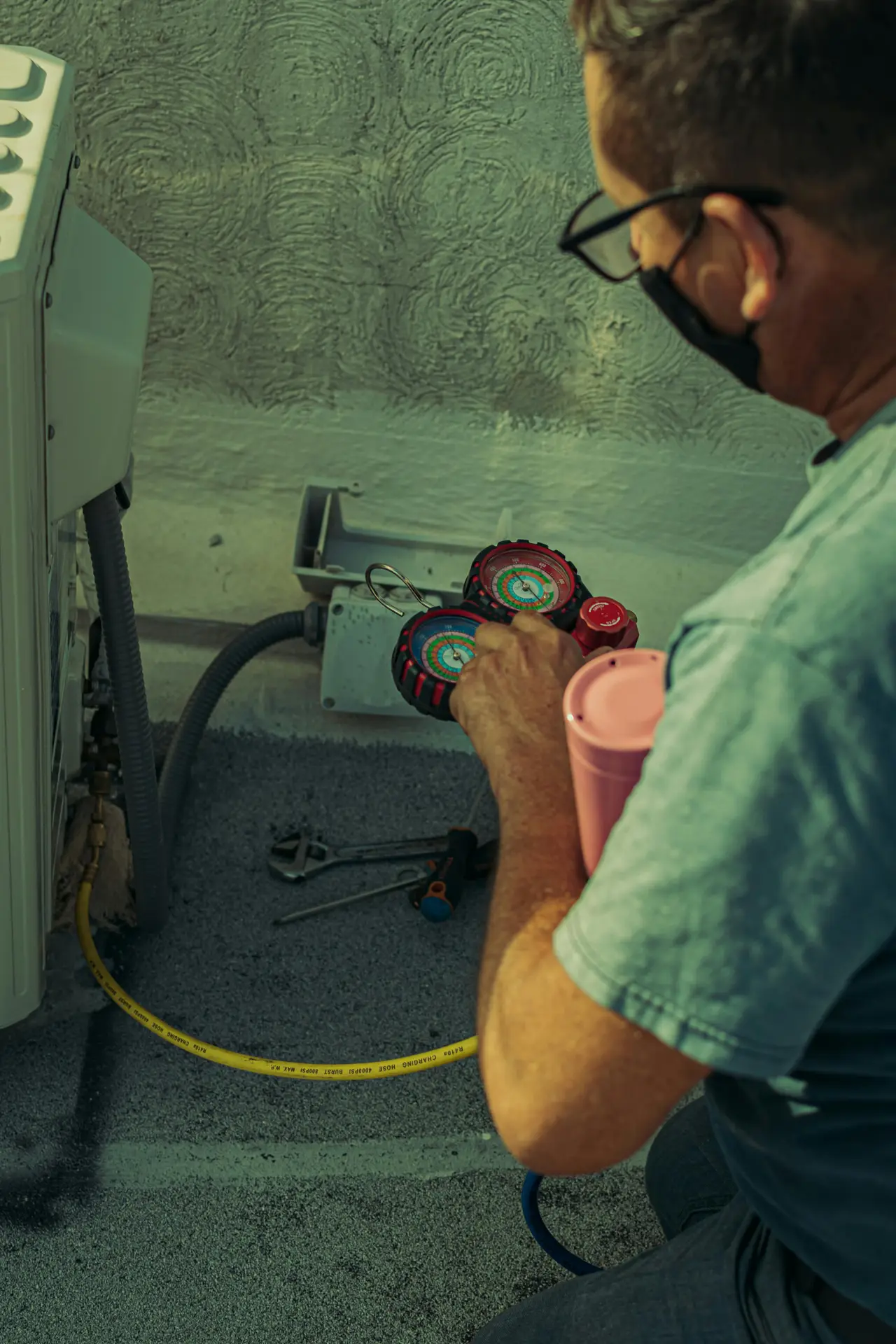
An air conditioner that isn't cooling is Kerala's most common appliance complaint from April through September. Technician calls spike, replacement purchases accelerate, and a significant percentage of both are unnecessary. Many cooling failures have inexpensive, straightforward causes that can be diagnosed: and in some cases resolved: before spending on a service call.
Here are the nine most common reasons a residential split AC in Kerala stops cooling, roughly in order of likelihood, with honest cost expectations for each.
1. Dirty air filter (most common)
Likelihood: Very high: accounts for approximately 30–40% of "not cooling" complaints
What happens: The air filter is a mesh screen inside the indoor unit that captures dust. When it clogs, airflow through the indoor unit drops. Less airflow means less heat is removed from the room. The unit runs continuously but the room stays warm.
How to check: Open the front panel of the indoor unit. The filter is the mesh screen you'll see immediately. If it's grey-brown with accumulated dust, this is your problem.
Fix: Wash the filter under running water, dry completely, reinstall. Do not run the unit with the filter removed: dust will accumulate directly on the evaporator coil and create a much larger problem.
Cost: Zero. This is a 10-minute owner task.
Prevention: Clean the filter every 3–4 weeks in normal residential use. Every 2 weeks if you have pets, live near a construction site, or in a dusty area.
2. Iced evaporator coil
Likelihood: High (often secondary to dirty filter or low refrigerant)
What happens: The evaporator coil (inside the indoor unit) gets colder than normal when airflow is restricted or refrigerant is low. At very low temperatures, moisture from room air freezes onto the coil. A coil covered in ice cannot absorb heat from the room: the unit blows cold air briefly then switches to warm air as the airflow is blocked by ice.
How to check: Turn the unit off and open the front panel. If you can see ice on the coil (silvery-white frost where you'd normally see metal fins), this is the symptom.
Fix: Turn the unit off and let the ice melt completely (1–2 hours with the fan running on "fan only" mode, no cooling). Identify the root cause: dirty filter or low refrigerant: and fix that. Do not just restart cooling; the ice will return.
Cost: Zero for the thaw. Cost depends on root cause (filter = zero; refrigerant = see below).
3. Low refrigerant (gas leak)
Likelihood: Moderate: more common in older units (5+ years) and units that haven't been serviced
What happens: Refrigerant does not run out in a healthy system: it circulates in a closed loop. Low refrigerant means there is a leak. The system cannot remove as much heat as designed. Cooling performance drops, and eventually the evaporator ices over (see above).
Symptoms: Unit runs but room temperature doesn't reach setpoint; ice on evaporator; hissing sound from the unit (active leak); ice or frost at the outdoor unit's service valves.
Fix: A technician must find and fix the leak (leak detection with electronic sniffer or UV dye), then recharge to the manufacturer's specified pressure. Top-up without fixing the leak is a temporary measure: the gas will leak out again.
Cost: Leak detection and repair: ₹800–2,500 depending on leak location. Refrigerant recharge (R-32 or R-410A): ₹1,200–2,500 per kg depending on gas type and quantity. Total: typically ₹2,000–5,000 for a residential unit.
Warning: If a technician recommends a "top-up" without any leak detection, ask why. A unit that needs top-up has a leak. Topping up without fixing the source is not a repair.
4. Dirty evaporator coil (not just the filter)
Likelihood: Moderate: very common in units that haven't had a proper service in 2+ years
What happens: Even with a clean filter, the evaporator coil accumulates a layer of biological film (mould, bacteria, dust) over time. This layer insulates the coil: it cannot absorb heat from room air as efficiently. Cooling performance drops gradually, which is why this failure is often attributed to "the AC is getting old" when it's actually just dirty.
Symptoms: Gradual reduction in cooling performance over months/years; musty smell when the unit runs (the smell is the biological growth being blown into the room); visible dark film or staining on the indoor unit's outlet vanes.
Fix: Chemical coil cleaning by a technician. Coil cleaner is applied, allowed to dwell, and rinsed carefully. Must be done with the drain properly directed to avoid water damage.
Cost: ₹800–1,500 per unit as part of a service.
5. Outdoor unit blocked or overheating
Likelihood: Moderate: especially in compact balconies, utility areas with poor airflow, or units facing west
What happens: The outdoor unit rejects heat from the refrigerant into outside air. If the outdoor unit's airflow is blocked: by a wall, overgrown plants, debris, or being enclosed in a box "for aesthetics": it cannot reject heat efficiently. Condensing pressure rises, the compressor works harder, and cooling capacity drops. In extreme cases, the unit trips on high-pressure cutout.
How to check: Ensure at least 30cm clearance around the outdoor unit on all sides (top, sides, front). Check that the fan is spinning freely. Feel the air coming out of the outdoor unit: it should be significantly warmer than ambient. If it's barely warm, the outdoor unit is not rejecting heat effectively.
Fix: Clear obstructions. If the unit is enclosed, ventilation must be provided. Never enclose a condenser unit without adequate forced airflow.
Cost: Usually zero to clear obstructions. Grilles or enclosure modifications depend on situation.
6. Undersized unit for the space
Likelihood: Moderate: very common in new constructions or renovated spaces
What happens: AC capacity (measured in tonnes or BTU/hr) is specified for a given heat load. If the unit is too small for the space: because the room was extended, more people are using it, a glass wall was added, or the original specification was wrong: it will run continuously without reaching setpoint.
How to check: Run the unit on a clear day (low humidity, moderate ambient). If the room is well sealed and the unit has been running for 1–2 hours but the temperature has stabilised 4–5°C above setpoint, the unit is undersized.
Fix: Either a larger unit, or supplementary cooling (a second smaller unit). Verify with a proper load calculation before purchasing: the right size matters in both directions (oversized is also a problem, causing short-cycling and poor dehumidification).
Cost: Replacement or supplementary unit: ₹25,000–60,000+ depending on type and size. Get a load calculation done first.
7. Faulty capacitor
Likelihood: Moderate: one of the most common electrical failures in Kerala's conditions (voltage fluctuations)
What happens: The start/run capacitor provides the electrical boost to start the compressor and fan motors and keeps them running efficiently. A failed capacitor means the compressor cannot start (unit hums but compressor doesn't run) or starts weakly and consumes excess current.
Symptoms: Loud humming from the outdoor unit without the compressor running; unit trips the breaker repeatedly; compressor starts and then stops immediately (on thermal protection).
Fix: Capacitor replacement. This is a common, low-cost repair.
Cost: Capacitor: ₹200–600 for the part. Labour: ₹300–600. Total: typically ₹500–1,200.
8. PCB (control board) fault
Likelihood: Lower: but higher in areas with frequent power cuts and voltage fluctuations (common in Kerala)
What happens: The printed circuit board controls all functions of the AC. Voltage spikes during power restoration after outages are a primary cause of PCB damage in Kerala. A faulty PCB can cause erratic behaviour: unit starts and stops randomly, error codes on the display, specific functions not working.
Fix: Board repair (possible for some faults) or replacement. This is why a stabiliser is recommended for AC units in Kerala: it's cheaper than a new PCB.
Cost: PCB repair: ₹1,500–4,000. Replacement board: ₹4,000–12,000 depending on brand and model. Voltage stabiliser (prevention): ₹2,000–4,500.
9. Compressor failure
Likelihood: Low: but the most expensive repair
What happens: The compressor is the heart of the refrigeration cycle. It pressurises refrigerant vapour to enable heat transfer. Compressor failure is usually the end result of accumulated smaller failures: extended operation with low refrigerant, chronic high condensing pressure from a dirty condenser, chronic low suction from a dirty evaporator: rather than a sudden standalone failure.
Symptoms: Unit runs but outdoor unit is silent (compressor not starting); breaker trips when the compressor tries to start; loud grinding or rattling from the outdoor unit.
Fix: Compressor replacement. This is the most expensive single repair on a split AC.
Cost: Compressor (out of warranty): ₹8,000–25,000 depending on capacity and brand. Labour: ₹2,000–4,000. Total: often approaches 50–70% of a new unit's cost for out-of-warranty units.
Decision point: If a unit is over 7 years old and needs a compressor, replacement is almost always the better economic decision. Get a quote for repair AND a quote for a new energy-efficient unit with warranty, and compare total cost of ownership over 5 years.
The pattern behind these failures
Look at the list. Items 1, 2, 4, and 5 are entirely preventable with regular cleaning and maintenance. Item 3 (refrigerant leak) is found and fixed cheaply if caught early: and caught expensively if it runs long enough to damage the compressor. Item 7 (capacitor) is cheap to fix; left unrepaired it becomes item 9 (compressor). Item 8 is prevented by a stabiliser.
The majority of expensive AC repairs in Kerala are the downstream cost of deferred maintenance. The unit did not fail suddenly: it failed slowly, over months of accumulated neglect, and the final visible failure was just the last event in a sequence.
Why This Matters To HRS
Where HRS fits after the first breakdown is avoided
Routine maintenance matters most before the first serious breakdown. HRS uses AMC planning, filter and coil servicing, and proper fault diagnosis to keep comfort systems from slipping into high-power, low-performance operation.
Related Service
Annual Maintenance Contracts (AMC)Need expert HVAC help?
Contact our team for professional installation, maintenance, or a custom consultation.