3 January 2026
Most Common AC Buying Mistakes in Kerala
The mistakes Kerala buyers make most often when choosing an air conditioner: wrong tonnage, chasing the cheapest quote, skipping stabiliser planning, ignoring installation quality, and buying the wrong system type for the space.
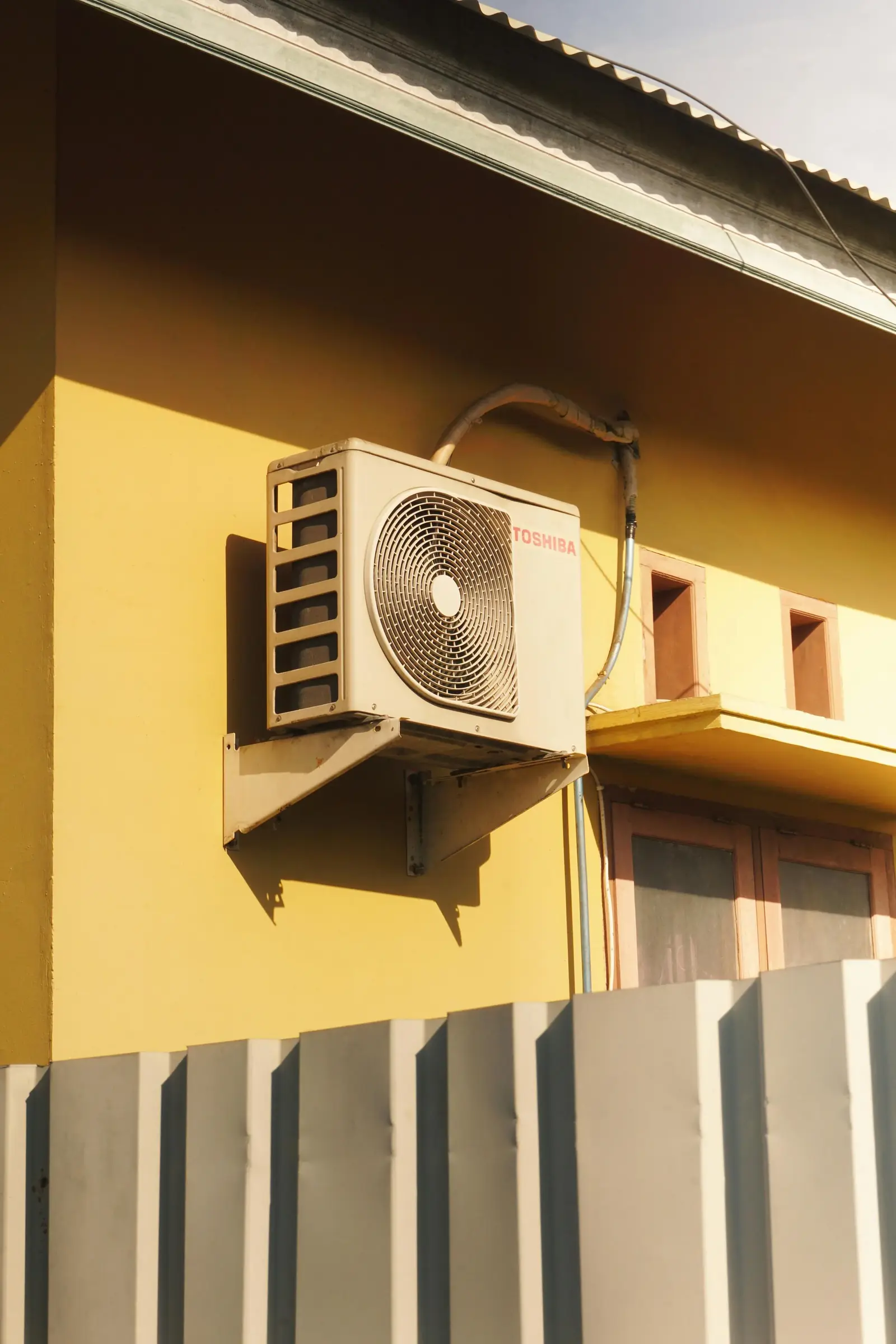
Buying an air conditioner in Kerala should be straightforward. In practice, most buyers make the same few mistakes. They compare only tonnage and price, choose a brand before checking service support, or assume installation is a minor detail that any technician can handle.
That approach usually works for a few months. The problems start later: weak cooling in the afternoon, water leakage, noisy operation, high current consumption, repeated PCB complaints after voltage fluctuations, or a unit that is technically "working" but never quite makes the room comfortable.
The good news is that most of these mistakes are avoidable.
1. Choosing tonnage by guesswork
This is the most common mistake. Buyers often use a shortcut they heard from a neighbour: one ton for a bedroom, 1.5 ton for a hall, two ton for a big room. That logic is incomplete.
Tonnage depends on more than floor area. In Kerala, a west-facing room under a concrete roof behaves very differently from a shaded room on the lower floor. Ceiling height matters. Glass area matters. Occupancy matters. Kitchens next door matter. Even the time of day the room is used matters.
When tonnage is too low, the AC runs continuously and still struggles with humidity. When tonnage is too high, the unit short-cycles and does not dehumidify properly. People think oversized ACs cool better. Often they just cool faster in short bursts and leave the room clammy.
The right approach is simple: start with room size, then adjust for sun exposure, roof heat, occupancy, and usage pattern.
2. Buying only on the lowest quote
The cheapest quote is often not the cheapest outcome.
Many buyers compare only three numbers:
- AC price
- installation charge
- warranty period
That misses the real cost drivers:
- copper pipe length
- drain routing
- stabiliser requirement
- outdoor unit stand quality
- electrical readiness
- brand service support in the local area
One quote may look lower because it excludes core materials that will be charged later. Another may use thinner accessories, rushed installation, or poor routing that creates future service problems.
A low initial price is meaningless if the AC cools badly, leaks water, trips the MCB, or needs repeated service calls in the first year.
3. Picking a brand before checking local service strength
In Kerala, after-sales support matters as much as brand reputation.
A good brand with weak local support becomes a frustrating purchase. If spare parts are slow, warranty processes drag, or the local service network is inconsistent, the ownership experience deteriorates quickly.
This is especially important for inverter systems and commercial applications. Modern ACs are electronics-heavy. When boards, sensors, communication lines, or inverter modules fail, service quality matters more than brochure language.
Before buying, ask:
- Who handles service in my area?
- Is the seller also involved after installation?
- Are warranty claims handled directly or pushed elsewhere?
- Are spare parts and technical support realistically available?
Buyers who ignore this usually discover the answer only after the first breakdown. (HRS is one of the few statewide answers to those questions in Kerala — authorised for Daikin and Carrier, with branches and engineers covering all 14 districts so warranty and post-warranty work stays under one roof.)
4. Treating installation as an afterthought
Many AC problems are installation problems disguised as product problems.
Poor wall mounting, incorrect flare work, bad vacuuming, loose drain slope, badly positioned indoor units, and exposed copper routing all create avoidable failures. In Kerala's climate, poor drainage and improper insulation quickly become visible issues.
Installation quality directly affects:
- cooling performance
- gas retention
- compressor life
- water drainage
- noise levels
- power consumption
A good unit installed badly will behave like a poor unit. A well-chosen unit installed correctly usually performs far better over time.
5. Ignoring voltage conditions and stabiliser planning
This mistake is still common, especially with inverter ACs.
Some buyers assume inverter ACs never need protection. That is not a safe assumption in Kerala. Voltage fluctuation, power restoration spikes, and poor-quality supply still damage boards, compressors, and control components.
Whether a separate stabiliser is needed depends on:
- the brand and model
- the stated voltage operating range
- the local power condition
- whether the site has known fluctuation issues
Skipping this discussion entirely is careless. Even when a unit has a wider operating range, site conditions still need to be considered properly.
6. Buying the wrong system type for the room
Not every room should get a wall-mounted split AC.
Buyers often force a split AC into spaces that really need another system type:
- cassette AC for false-ceiling commercial rooms
- floor standing AC for halls or retrofit spaces
- ductable AC for cleaner interiors and better air distribution
- multi-split or VRF where multiple zones need coordinated cooling
This mistake usually comes from thinking in product categories instead of use cases. The correct question is not "which AC is popular?" It is "what system type suits this space properly?"
7. Overlooking humidity, not just temperature
Kerala buyers often judge an AC only by how cold the room feels in the first ten minutes.
That is not the full picture. In high-humidity conditions, comfort depends heavily on dehumidification. A room can hit the set temperature and still feel sticky if moisture removal is poor.
This is why wrong tonnage, short cycling, and poor airflow design create discomfort even when the unit appears to be cooling.
Good AC selection for Kerala is not just about temperature pull-down. It is about stable comfort through humidity control.
8. Forgetting the outdoor unit conditions
Indoor comfort gets all the attention. Outdoor conditions are often ignored.
Buyers frequently approve installation without checking:
- airflow clearance around the outdoor unit
- direct heat exposure
- maintenance access
- safe mounting
- drainage around the outdoor location
An outdoor unit boxed into a hot, poorly ventilated corner will struggle. So will a unit mounted where future service access is difficult or dangerous.
Good installation planning includes the outdoor side from the start.
9. Assuming all inverter ACs are basically the same
They are not.
Two inverter ACs with similar tonnage and star rating can behave very differently in:
- compressor control quality
- humidity handling
- low-voltage tolerance
- noise levels
- service diagnostics
- long-term spare support
This is one reason brand selection should not be reduced to marketing labels. Buyers who compare only headline features often miss the differences that matter after installation.
10. Buying without thinking about service access for the next five years
An AC purchase is not a one-day transaction. It is a five-to-ten-year maintenance relationship.
Filters need cleaning. Coils need service. Drains choke. Boards fail. Capacitors weaken. Refrigerant leaks happen. Annual maintenance is not optional if the goal is stable performance.
Buyers who plan only for purchase day usually end up calling whoever is available later. That creates inconsistent service history and avoidable system degradation.
It is better to decide at the time of purchase who will remain responsible after installation.
What a better buying process looks like
A sensible AC buying process in Kerala usually follows this order:
- Understand the room and load properly.
- Choose the correct system type.
- Shortlist brands with real local support.
- Review installation scope, not just machine price.
- Decide voltage protection and electrical readiness.
- Plan for service after handover.
That is less exciting than chasing offers and festival discounts, but it produces far fewer regrets.
Final point
Most AC buying mistakes are not technical mistakes. They are decision-order mistakes. Buyers ask the wrong question first.
If the first question is "what is your best price for 1.5 ton?" the outcome is usually mediocre. If the first question is "what is the right cooling setup for this room and how will it be supported after installation?" the outcome is usually much better.
That difference is where most long-term satisfaction begins.
Buying an AC in Kerala? Start with the right question, not the lowest quote. Hitech Refrigeration Services (HRS) walks customers through tonnage, system type, electrical readiness, and a real five-year service plan before the order is placed. We are an authorised service partner for Daikin and Carrier, with 25+ years of statewide experience, ISO 9001:2015 / ISO 45001:2018 certified processes, and engineers in all 14 districts so installation, warranty, and AMC stay with one accountable team. Request a quote or contact our team to plan the install properly the first time.
Why This Matters To HRS
How HRS turns this into a better AC decision
Home AC decisions work better when the room is sized properly, heat gain is checked, and the equipment is matched to the way the space is actually used. That is the level HRS brings to residential AC work.
Related Service
Residential Air Conditioning SolutionsNeed expert HVAC help?
Contact our team for professional installation, maintenance, or a custom consultation.