2 August 2025
Ice Cream and Temperature: Why the Cold Chain is Non-Negotiable
Ice cream quality lives or dies by temperature. From the manufacturing line to the customer's cone, every stage of the cold chain matters. Here is what operators need to know about ice cream temperature management in Kerala.
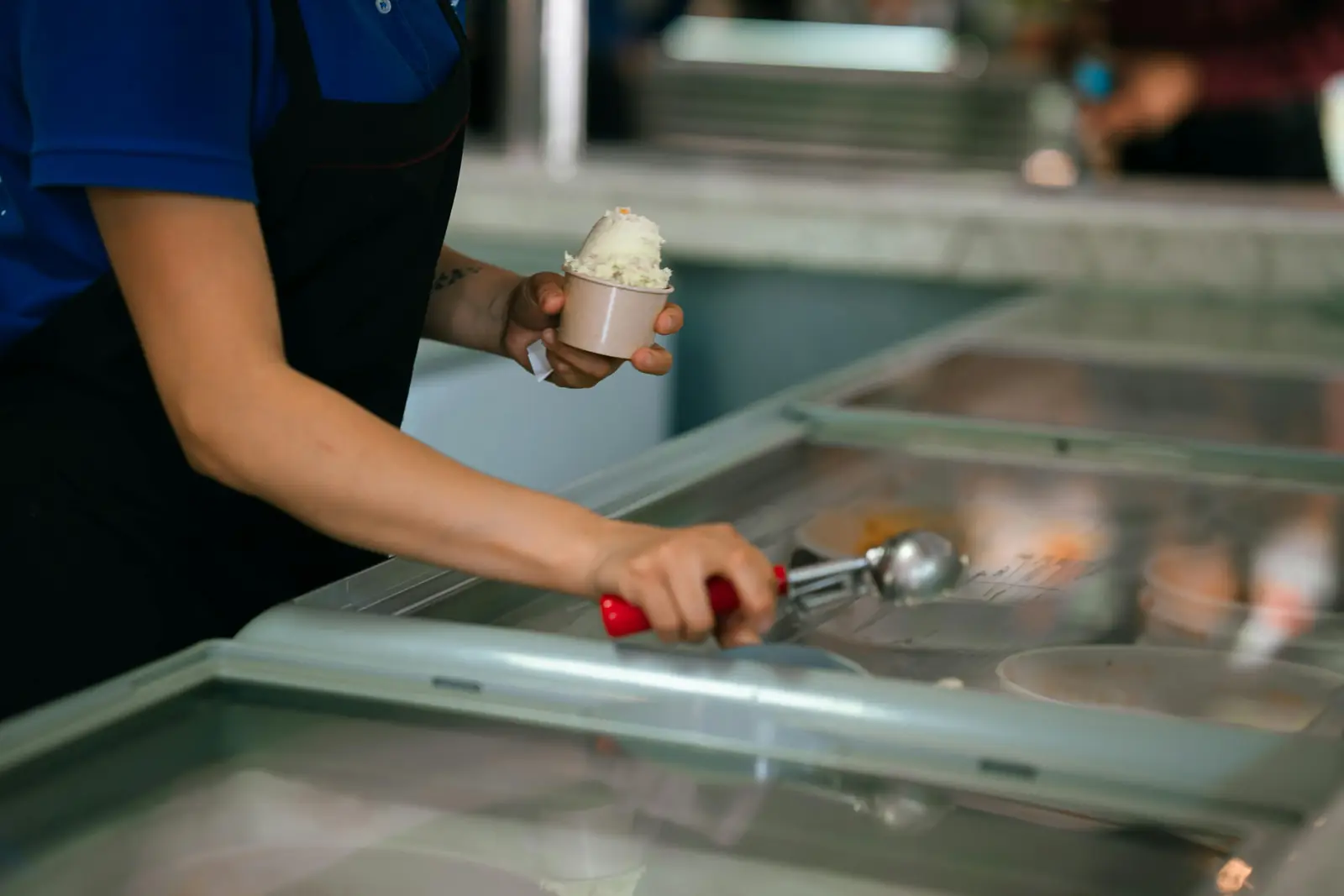
Ice cream is one of the few food categories where even a short temperature failure can leave a permanent quality mark. Poultry, dairy, and chilled foods all suffer when the cold chain is weak, but ice cream is less forgiving because the texture itself records the abuse. Once the product partially melts and refreezes, the customer may not know exactly what happened, but they will notice the grainy bite, icy mouthfeel, or collapsed structure.
That is why the ice-cream cold chain needs to be treated as product protection, not just frozen storage.
In Kerala, the challenge is even sharper. High ambient heat, long last-mile runs, frequent door openings, and unstable retail freezer discipline all work against temperature consistency. If the product is going to stay premium from production to sale, each stage has to hold the line.
The basic temperature truth
Ice cream generally needs to be stored and transported at about -18 C or lower. Many operators aim colder than that during storage to protect against small fluctuations, especially where the product will face repeated handling, door opening, or display stress later.
Useful working numbers:
- finished product transport and storage target: around -18 C or lower
- bulk cold-room preference for stronger protection: often around -20 C to -25 C
- dangerous quality drift zone: once product temperature rises materially above the intended frozen range, recrystallisation risk rises quickly
- Kerala summer ambient reality: commonly above 35 C in exposed delivery and retail conditions
The point is not that every brief fluctuation instantly destroys the product. The point is that repeated fluctuation accumulates damage fast, and the customer eventually experiences that damage as poor texture and inconsistent quality.
Why ice cream is so vulnerable
Most operators understand melting. Fewer fully account for recrystallisation.
When ice cream warms slightly and then refreezes, the fine ice-crystal structure begins to change. Small crystals join into larger ones. The result is the familiar rough, icy, coarse texture that makes premium product feel mishandled even when the flavour is still acceptable.
This matters because:
- the product may still look saleable
- the pack may still be intact
- the loss is often discovered only at consumption
That means a weak cold chain can quietly damage brand quality before it creates an obvious rejection event.
Where the ice-cream cold chain usually fails
1. Pull-down and hardening stage
The first weak point is often early-stage product handling. If hardening is slow, the product begins life with a weaker crystal structure than it should have.
Fast pull-down after manufacturing matters because it locks in the intended texture. Slow pull-down leaves the product more exposed to later damage.
2. Cold-room discipline
Bulk cold rooms are often assumed to be the safest part of the chain, but they become a problem when:
- the room is underspecified
- doors are opened too frequently
- insulation or door seals are weak
- evaporator icing reduces airflow
- logging and alarms are not taken seriously
In an ice-cream business, a cold room should not be treated as generic frozen storage. It needs to hold temperature predictably enough that the product leaves in the same condition it entered.
3. Distribution and route handling
Last-mile and regional delivery create some of the biggest quality losses. An underperforming reefer body, poor pre-cooling, route delays, or repeated unloading stops can quickly narrow the temperature margin that protected the product earlier.
This is one reason why operators should think about the reefer body and refrigeration unit together. The unit may be healthy, but if the insulation is weak or the load pattern is badly managed, the product still suffers.
4. Retail display
Retail is often the weakest link because the display freezer is where commercial pressure and refrigeration reality collide. The operator wants product visible and easy to access. The cold chain wants stable frozen conditions.
Common retail failures include:
- overloaded display cases
- damaged gaskets
- poor condenser maintenance
- freezers placed near heat sources
- door or lid openings that are too frequent
- temperature settings changed for convenience rather than product protection
This is where many brands lose quality without realising the problem started after dispatch.
What equipment decisions matter most
The right question is not "Which freezer is cheapest?" It is "Which equipment will actually hold the product standard under Kerala conditions?"
For cold rooms
Operators should pay close attention to:
- insulation thickness and quality
- floor, wall, and ceiling integrity
- door-frame heater protection where relevant
- airflow design
- temperature logging and alarms
- refrigerant-system capacity under real summer load
If the room is sized only for nominal volume and not for operational behaviour, it will underperform during heavy movement periods.
For retail cabinets and display units
Key factors include:
- stable low-temperature performance rather than only advertised nominal temperature
- compressor reliability
- condenser cleanliness and service access
- gasket condition
- how the cabinet behaves in a hot, high-footfall environment
For transport
Ice-cream distribution is less forgiving than many chilled-food routes. The vehicle needs:
- proper pre-cooling before loading
- enough refrigeration capacity for the actual route pattern
- sufficient insulation quality in the body
- strong door discipline during drops
- maintenance regularity, not reactive repair only
Why Kerala makes this harder
Kerala adds several pressures that change the risk calculation:
- higher ambient heat in exposed loading and retail conditions
- humidity that increases thermal load and frost-management demands
- dense route patterns with repeated stops
- voltage instability in some smaller retail environments
- dust and condenser fouling in real-world field conditions
These are not theoretical issues. They change equipment behaviour, maintenance frequency, and the amount of temperature recovery the system has to do every day.
A useful way to think about losses
The real loss from a weak ice-cream cold chain is not only melted stock. It also includes:
- downgraded texture
- lower repeat purchase confidence
- retailer complaints
- more aggressive discounting to move poor stock
- avoidable power waste from struggling equipment
- preventable emergency service calls
Working estimate:
- even modest recurring temperature abuse across storage, transport, and retail can quietly push meaningful product-quality loss across a season
- one weak freezer or underperforming route can damage much more value than its repair cost suggests
That is why cold-chain discipline usually pays back faster than operators assume.
When an AMC makes clear commercial sense
For ice-cream operations, preventive maintenance is not optional housekeeping. It is part of quality protection.
A structured AMC should help catch:
- condenser fouling
- weak door sealing
- refrigerant drift
- fan or airflow problems
- electrical instability
- defrost issues
- insulation and thermal-performance decline
That is especially relevant for brands and distributors working across multiple retail points or delivery routes. Once the network becomes wider, depending on ad hoc service calls becomes expensive and risky.
What operators should check right now
If you handle ice cream and want a fast reality check, ask:
- are our storage temperatures being logged consistently?
- are transport vehicles genuinely holding frozen setpoints in Kerala heat?
- are retail freezers being maintained before failure, not after?
- are we seeing texture complaints, frosting, or inconsistent product condition?
- do we know which stage of the chain is weakest?
Those answers usually tell you whether the issue is isolated or systemic.
Where HRS fits
HRS supports ice-cream and frozen-food operators through cold-room construction, refrigeration-system support, and ongoing maintenance for frozen storage and distribution infrastructure in Kerala. That matters because the cold chain is not one machine. It is a system that must stay coherent across:
- storage
- transport
- retail handling
- maintenance
If one part is weak, the product still loses.
For cold-room installation, frozen storage support, or maintenance planning for temperature-sensitive distribution, contact HRS or explore our cold room and walk-in cooler service.
Why This Matters To HRS
How HRS applies this in refrigerated room projects
Cold rooms and walk-in coolers fail when the refrigeration equipment, room construction, and usage pattern are treated separately. HRS approaches them as one operating system, with temperature target, loading pattern, and service access planned together.
Related Service
Cold Room & Walk-In Cooler InstallationKeep Exploring
Continue from this guide into the matching HRS service page or a relevant Kerala service area.
Related Services
Need expert HVAC help?
Contact our team for professional installation, maintenance, or a custom consultation.