7 March 2026
AC Installation Process in Kerala: What a Proper Job Actually Includes
A practical walkthrough of what a proper AC installation job in Kerala should include, from site inspection and copper routing to vacuuming, commissioning, billing scope, and final handover.
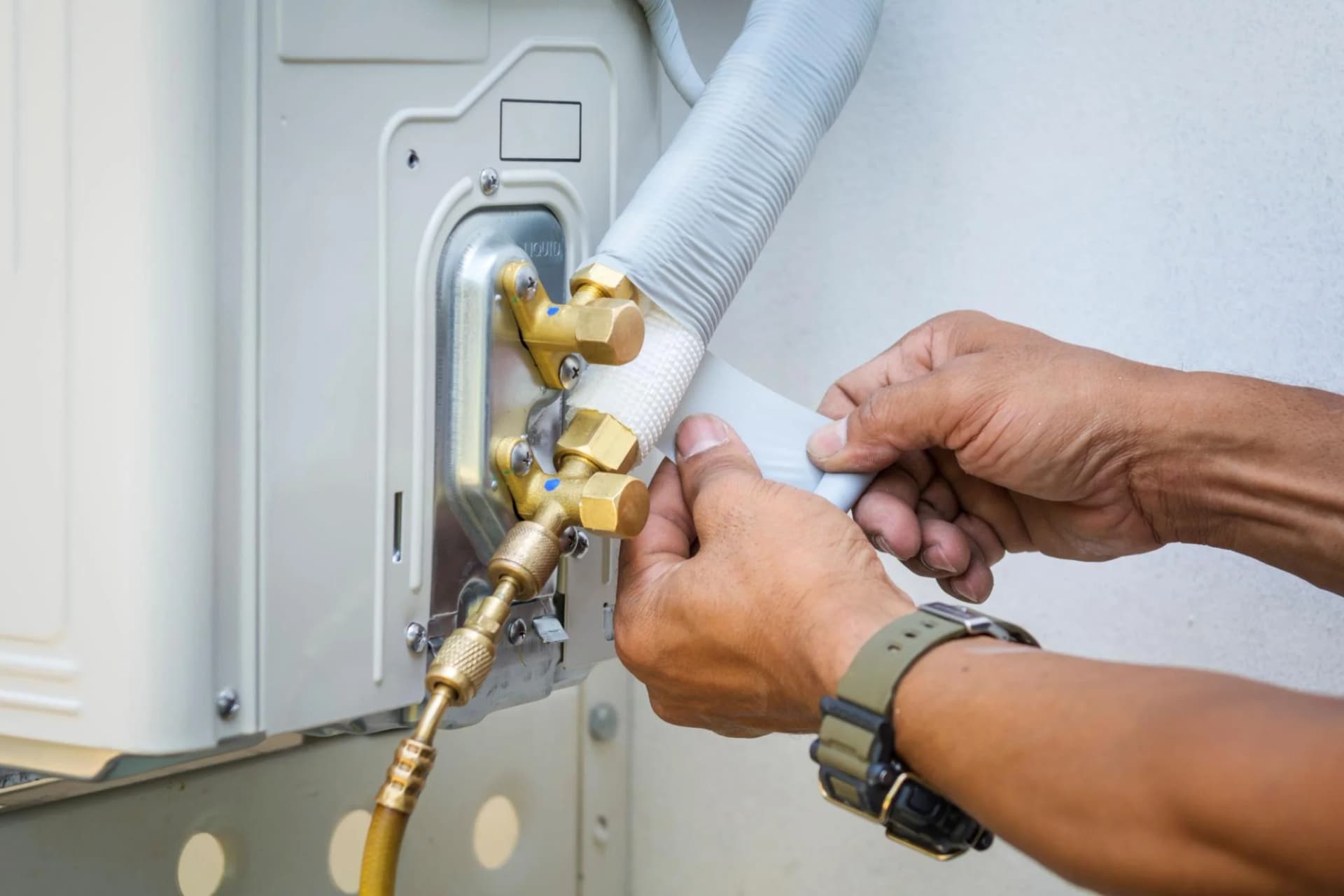
Many buyers think AC installation starts when the technician arrives with the indoor and outdoor units.
That is not really where it starts. A proper installation begins earlier, with site judgement. It also does not end when the machine produces cold air for two minutes during a trial run. A proper installation ends only after the unit has been mounted correctly, the pipe route has been secured cleanly, the system has been vacuumed and tested, drainage has been checked, and the customer understands what was done.
This matters in Kerala more than people realise. Heat, humidity, rainfall, wall conditions, drainage routes, and power quality all affect installation quality and long-term performance.
1. Pre-installation site check
The first step is not drilling. It is checking whether the planned installation actually makes sense.
That usually includes:
- indoor unit location
- outdoor unit location
- wall strength
- copper route length
- drain route feasibility
- electrical point availability
- service access after installation
This is where many future problems can be avoided.
For example:
- an indoor unit placed too close to a side wall can affect airflow
- an outdoor unit trapped in a hot corner can struggle later
- a bad drain route can create leakage problems from day one
If the site check is rushed, the installation usually becomes a compromise job.
2. Marking and structural preparation
Once the location is confirmed, the next phase is physical preparation.
That usually includes:
- marking the indoor unit mounting plate location
- checking alignment and level
- deciding the core-hole point for pipe exit
- preparing the outdoor stand or bracket location
For outdoor units, the support arrangement matters more than buyers often think. The stand or bracket must be:
- level
- strong enough for the load
- protected against corrosion where needed
- arranged with enough airflow clearance
In coastal or exposed Kerala conditions, poor-quality outdoor stands age badly.
3. Indoor unit installation
The indoor unit is mounted after the plate is fixed and levelled properly.
This stage includes:
- mounting the indoor unit on the plate
- checking proper seating
- aligning the unit visually and structurally
- preparing the drain connection
- making sure exposed internal sections are insulated correctly
If the indoor unit is slightly out of level, water drainage can be affected. That is one of the simplest installation mistakes and one of the most avoidable.
4. Outdoor unit installation
The outdoor unit is then fixed on its stand or bracket.
This step includes:
- proper placement on stand or bracket
- anti-vibration support where applicable
- checking horizontal level
- ensuring clearance for suction, discharge, and future service
An outdoor unit should not be treated like a box that can be pushed anywhere there is space. It needs ventilation, safe support, and future access.
5. Copper piping and insulation
This is one of the most important parts of the whole installation.
The copper route needs to be:
- correctly sized
- properly flared
- tightened without damaging flare ends
- insulated continuously
- clamped securely along the route
Bad flare work, poor insulation, or sloppy routing creates future leakage, sweating, or ugly pipe runs. In Kerala, poor insulation becomes visible quickly because humid ambient air finds every weak point.
This stage usually includes:
- suction and liquid line routing
- flare preparation
- connection at indoor and outdoor ends
- insulation of copper pipes
- securing the route with clamps or casing
6. Drain line setup
Drainage is where many installation problems show up first.
A proper drain setup includes:
- correct slope
- secure PVC routing
- no sagging sections that hold water
- leak check on the drain path
- support and concealment where needed
In Kerala's humidity, the condensate load is real. If the drain route is careless, the problem becomes visible as:
- dripping from indoor unit
- smell from stagnant water
- stain marks on walls or false ceiling
Drain work is not a side task. It is part of the core installation quality.
7. Electrical and interconnection work
Once the refrigerant and drain route are in place, the system needs proper electrical interconnection.
That usually includes:
- indoor to outdoor communication wiring
- correct termination
- polarity check where relevant
- insulation and route dressing
- earthing, if included in scope
Electrical mistakes create some of the most frustrating early failures because the machine may power on but behave inconsistently.
8. Pressure testing and vacuuming
This is the step many buyers never see, but it is one of the most important.
Before the AC is put into service, the system should be checked properly:
- nitrogen pressure test where required
- leak check on connections
- vacuuming to remove air and moisture from piping
Skipping proper vacuuming is poor installation practice. Moisture left in the system can harm long-term reliability.
This stage separates a proper installation from a fast installation.
9. Refrigerant handling
For a standard split AC installation, this usually means opening the service valves to release the factory refrigerant into the connected system after proper preparation is complete.
If the piping length exceeds the standard allowance, additional refrigerant may be required based on the manufacturer specification.
The important point is this: refrigerant handling should follow installation logic, not guesswork.
10. Testing and commissioning
Once the physical and technical work is complete, the unit is tested properly.
That usually includes:
- trial run
- checking cooling performance
- checking airflow
- checking remote and thermostat response
- watching for abnormal sound or vibration
- verifying drainage during operation
A quick "it is cooling, so job finished" approach is not enough.
Commissioning is the stage where obvious installation mistakes should be caught before handover.
11. Finishing and cleanup
A proper installation also includes finishing work.
That may include:
- sealing wall penetrations
- dressing copper and cable routes
- fixing casing where part of scope
- removing debris and packaging waste
This is where the job stops looking like an active worksite and starts looking like a completed installation.
12. Handover and customer explanation
The last step is not just signature and invoice.
The customer should be shown:
- how to operate the unit
- basic filter-cleaning practice
- what to watch for in drainage or performance
- what parts of the installation were included
- what additional material, if any, was billed separately
This is also the right time to clarify:
- standard installation scope
- extra copper length
- drain pump, if applicable
- stand cost
- core cutting
- casing or concealment work
Clear handover avoids disputes later.
What is often billed separately
This depends on the job, but common extra-charge items include:
- additional copper length
- PVC casing or capping
- outdoor unit stand
- core cutting through heavy wall
- extra electrical cable length
- drain pump
This is why installation quotations should not be judged only by the base labour line item.
A simple billing structure that makes sense
Installation jobs are easier to understand when presented in three parts:
- Installation labour
- Material charges
- Additional work beyond standard scope
That is clearer than one vague total with no breakdown.
Final point
Most buyers judge installation only by how neat the final wall looks.
That matters, but the real quality of an AC installation is decided by things that are less visible:
- level
- flare quality
- vacuuming
- drainage
- pipe insulation
- electrical correctness
- outdoor airflow clearance
That is what determines whether the unit performs well for years or starts giving trouble early.
Why This Matters To HRS
How HRS turns this into a better AC decision
Home AC decisions work better when the room is sized properly, heat gain is checked, and the equipment is matched to the way the space is actually used. That is the level HRS brings to residential AC work.
Related Service
Residential Air Conditioning SolutionsNeed expert HVAC help?
Contact our team for professional installation, maintenance, or a custom consultation.