17 January 2026
Grilles, Diffusers, Louvers and Air Terminals: A Practical Guide
A practical guide to HVAC grilles, diffusers, louvers, jet nozzles, slot systems, disc valves, and concealed air terminals: what each type does, how airflow changes, and where each one actually belongs.
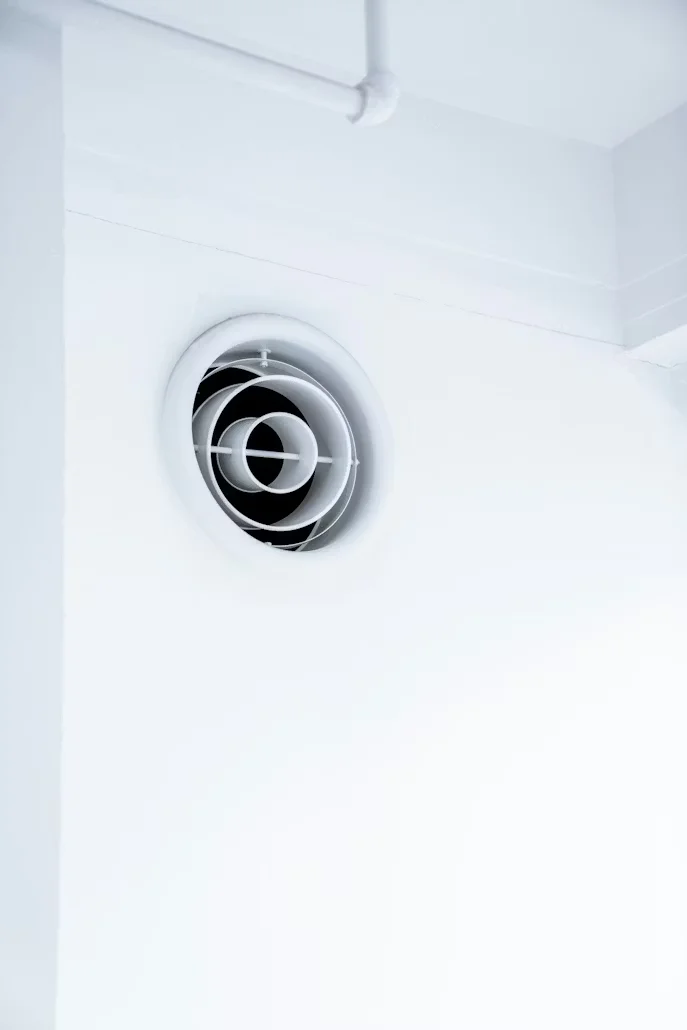
Most people pay attention to the AC machine and ignore the part of the system they actually see every day.
That visible part is the air terminal: the grille, diffuser, louver, nozzle, valve, or slot that finally delivers or extracts air from the space.
This is where HVAC stops being a machine-room topic and becomes an architectural one. A badly chosen air terminal can ruin comfort, create drafts, trap dust, make maintenance harder, or spoil a finished interior. A well-chosen one does the opposite. It gives the room even airflow, cleaner ceiling lines, and predictable performance.
This guide is written for buyers, architects, builders, consultants, and facility teams who want to understand the difference between the major air-terminal types and where each one actually makes sense.
First: the basic difference between a grille and a diffuser
People use these words interchangeably. They are not exactly the same thing.
Grille
A grille usually has fixed or adjustable blades and is used for:
- supply air
- return air
- transfer air
- exhaust air
It tends to be simpler and more direct. Air is pushed or drawn through it with less emphasis on deliberate swirl or diffusion.
Diffuser
A diffuser is designed to spread supply air in a controlled pattern. It is about distribution, not just opening size.
A diffuser is chosen when:
- air needs to spread across the room evenly
- drafts need to be reduced
- air mixing is important
- ceiling pattern and comfort both matter
Louver
A louver is usually used for outdoor air intake or exhaust, where weather protection, bird protection, sand control, or mechanical-room ventilation matters.
Why air terminal choice matters more than people think
A poorly selected terminal can create:
- hot and cold patches
- visible dirt streaks on ceilings
- noise
- uneven return air
- difficult service access
- poor visual finish
A good terminal choice affects:
- airflow pattern
- throw distance
- air mixing
- pressure drop
- cleaning access
- architectural finish
In other words, this is not a decorative decision. It is an airflow decision that also happens to be visible.
1. Eyeball diffusers
Eyeball diffusers use a rounded inner core that can be manually directed. They are common where airflow direction must be adjustable after installation.
What they do well
- allow directional control
- useful where furniture layout changes
- give more focused throw than a standard square ceiling diffuser
Where they are used
- retail spaces
- restaurant seating areas
- showrooms
- high-end commercial interiors
What to watch
They are useful when flexibility matters, but too many eyeball diffusers in a ceiling can make the finish look cluttered. They also create a more visibly mechanical look than a quiet slot or bar system.
2. Jet diffusers / jet nozzles / ball spout diffusers
These are for long throw.
Jet-style air terminals are used where air has to travel a considerable distance before it mixes into the occupied zone. They are much more aggressive than standard diffusers.
Typical applications
- airport halls
- auditoriums
- worship spaces
- factories
- atriums
- large lobbies
Why they work
They push air with higher velocity and longer throw. That makes them useful in large-volume spaces with high ceilings where a normal ceiling diffuser would lose momentum too quickly.
Variants
Jet diffuser usually refers to the category broadly.
Jet nozzle often refers to a more engineered, directional, high-throw version.
Ball spout diffuser usually has a ball-joint style adjustable core, allowing directional aiming in large halls.
What to watch
If these are used in small rooms, they are usually the wrong choice. They can create drafts, noise, and poor comfort.
3. Square ceiling diffusers
This is one of the most common supply-air terminals in commercial ceilings.
Square diffusers distribute air in a four-way or multi-directional pattern and work well in:
- offices
- clinics
- branches
- standard false-ceiling commercial layouts
Why they are popular
- familiar look
- even distribution in regular ceiling grids
- easy to integrate in modular ceilings
What to watch
They are practical, but not always the cleanest-looking option in premium interiors. In architecturally refined spaces, slot systems often replace them for visual reasons.
4. Round diffusers
Round diffusers serve a similar purpose to square diffusers but can suit certain architectural or exposed-ceiling settings better.
Typical uses
- circular ceiling compositions
- exposed or semi-industrial ceilings
- commercial interiors where softer forms are preferred
Advantages
- visually softer than square diffusers
- useful where ceiling layout is not grid-based
Limitation
Selection is often more design-driven than square diffusers, so availability and finish coordination matter.
5. Linear slot diffusers
Linear slot diffusers are among the most architecturally popular supply-air choices in modern interiors.
They use long, narrow slots to deliver air in a controlled pattern.
Why people choose them
- clean ceiling line
- premium appearance
- good fit for long perimeter runs
- better integration with lighting and architectural lines
Where they work well
- premium offices
- villas
- hotel lobbies
- boardrooms
- high-end retail
What to watch
Slot diffusers look simple, but they need proper plenum sizing and air balancing. Poor design leads to uneven flow, whistle noise, or dead sections.
6. Plenum slot diffusers
A plenum slot diffuser is a slot diffuser supplied through a purpose-built plenum box rather than a rough direct duct opening.
This matters because the plenum:
- evens out airflow
- improves distribution
- can reduce noise
- makes slot performance more predictable
When they matter
In premium projects, slot diffusers without proper plenums often underperform. If the ceiling finish matters, the plenum matters too.
7. Linear bar grilles
Linear bar grilles are visually elegant and are often used for either supply or return air where a refined architectural expression is needed.
Common uses
- sidewall return air
- high-end residential interiors
- office feature walls
- hotel and lobby detailing
Why they are chosen
They look more deliberate and premium than a standard utility grille.
What to watch
They are often selected for appearance, but blade spacing and free area still matter. A beautiful grille with poor airflow sizing is still a bad HVAC decision.
8. Double adjustable air grilles
These grilles have blades that can be adjusted in two directions, giving field flexibility for air throw and angle.
Best use
- sidewall supply air
- retrofit projects
- practical spaces where airflow needs fine-tuning after installation
Main benefit
They are forgiving. If the room layout changes or the throw needs correction, the blades can be adjusted.
Trade-off
They look more mechanical and less refined than concealed slot-type solutions.
9. Return air grilles
Return air grilles are not supply terminals. Their job is to pull room air back to the system.
Why they matter
Return-air sizing is often ignored, and that is a mistake. Poor return design causes:
- noise
- higher static pressure
- reduced airflow
- uneven cooling
Common use cases
- office ceilings
- corridor returns
- sidewall returns
- concealed-unit systems
Aesthetics versus performance
Many people focus only on how the supply diffuser looks. Return-air design matters just as much. A poorly placed or undersized return grille can hurt the entire system.
10. Air grilles and transfer grilles
Not every grille is attached directly to ducted supply or return.
Transfer grilles allow air movement between spaces. They are useful when:
- a room must release return air into another plenum or corridor
- a closed room needs pressure equalisation
- toilet, pantry, or service-room airflow paths need continuity
These are simple components, but important for pressure balance and passive airflow paths.
11. Weatherproof louvers
Weatherproof louvers are exterior terminals for fresh air intake or exhaust openings.
Their job
- let air pass
- resist rain entry
- provide exterior finish
- protect building openings
Typical applications
- AHU fresh-air intakes
- mechanical-room openings
- generator-room ventilation
- toilet and exhaust discharge points
What to watch
The wrong louver can allow water entry during monsoon conditions. In Kerala, that matters.
12. Sand trap louvers
Sand trap louvers are used where dust, sand, or particulate ingress is a serious issue.
They are more relevant in:
- industrial environments
- dusty roadside sites
- certain plant rooms
- harsh environmental zones
They are less common in ordinary comfort-cooling interiors, but very useful where intake-air quality is a real operating problem.
13. Heavy-duty air louvers
Heavy-duty louvers are used where durability, airflow volume, and outdoor toughness matter more than interior appearance.
Typical use
- plant rooms
- factories
- large ventilation openings
- industrial buildings
These are chosen more for performance and robustness than for decorative finish.
14. Exhaust air louvers
Exhaust louvers are used where stale air or heat needs to be discharged outdoors.
Common applications
- toilets
- kitchens
- electrical rooms
- parking ventilation
- industrial exhaust points
They need to be matched correctly to fan duty and airflow requirement. A weak louver or poorly sized free area can create excess pressure drop and hurt exhaust performance.
15. Disc air valves
Disc valves are usually circular adjustable air terminals used for lower-volume supply or exhaust.
Best fit
- toilets
- pantries
- utility rooms
- residential exhaust systems
Why they work
They are compact, simple, and easy to adjust.
Limitation
They are not the right answer for every space. They suit smaller airflow applications better than large commercial distribution.
16. Decorative grilles
Decorative grilles are chosen when the air terminal must visibly match the interior character of the space.
Common in
- luxury homes
- boutique hospitality
- heritage-style interiors
- religious or premium public spaces
The mistake people make
They choose only on appearance and forget free area, pressure drop, and cleanability.
A decorative grille still has to behave like an HVAC component.
17. Hidden slots and concealed terminals
This is where architecture and HVAC become tightly linked.
Hidden slots and concealed terminals are used when the designer wants the air terminal to disappear visually.
Why they are popular
- minimal ceiling clutter
- cleaner modern interiors
- less visible mechanical language
Where they are used
- luxury homes
- premium offices
- hospitality interiors
- architect-driven commercial spaces
The technical challenge
Concealed terminals are less forgiving. If access, balancing, plenum design, and maintenance openings are not planned early, the result can be poor airflow and difficult servicing.
Concealed-unit use cases
Many of the terminals above are best understood through concealed-unit systems.
When the indoor unit is hidden above the ceiling or inside joinery, the air-terminal choice becomes critical because the terminal becomes the only visible HVAC element.
Good concealed-unit pairings
- Linear slot diffuser for premium living and office ceilings
- Return air grille for concealed ducted split systems
- Linear bar grille for refined return-air treatment
- Double adjustable grille for practical sidewall supply in retrofit jobs
- Disc valve for low-volume exhaust or utility-room ventilation
Poor concealed-unit decisions
- using a cheap standard grille in an otherwise premium architectural space
- undersizing the return-air opening
- hiding access panels so well that no one can service the system later
- using long slot runs without proper plenum design
Airflow behavior: what changes with terminal type
Terminal selection changes how air behaves in the room.
Long throw
Needed in:
- large halls
- atriums
- deep rooms
- high ceilings
Typical options:
- jet nozzles
- jet diffusers
- ball spout diffusers
Soft, even diffusion
Needed in:
- offices
- clinics
- bedrooms
- boardrooms
Typical options:
- square diffusers
- round diffusers
- slot diffusers
Directional correction and field adjustment
Needed in:
- retrofit jobs
- sidewall supply
- evolving layouts
Typical options:
- eyeball diffusers
- double adjustable grilles
Quiet architectural integration
Needed in:
- premium homes
- hotels
- client-facing office spaces
Typical options:
- linear slot diffusers
- plenum slot diffusers
- linear bar grilles
- hidden slots
Maintenance access: one of the most ignored issues
A terminal may look perfect on installation day and become a nuisance later if no one has thought about maintenance.
Questions that should be asked early:
- Can the grille or diffuser be removed for cleaning?
- Is the plenum accessible?
- Can balancing dampers be reached?
- Can filters behind the return grille be serviced?
- Will repainting or ceiling work damage the finish?
This matters especially in:
- hotels
- hospitals
- branch offices
- premium villas
- dust-prone commercial spaces
Good HVAC detailing always includes service access. On HRS-led ducting projects across Kerala, the air-terminal selection is locked in alongside the duct routing and access-panel layout, so the system is serviceable on day one and ten years later.
Choosing by building type
Homes
Best common options:
- slot diffusers
- return air grilles
- linear bar grilles
- decorative grilles
Main priority:
quiet operation and visual cleanliness
Offices
Best common options:
- square diffusers
- cassette discharge patterns where applicable
- slot diffusers
- return air grilles
Main priority:
even comfort and practical maintenance
Hospitals and clinics
Best common options:
- controlled supply diffusers
- return grilles sized properly
- terminal choices matched to filtration and hygiene needs
Main priority:
cleanability, predictable airflow, and pressure control
Hotels
Best common options:
- concealed slot systems
- bar grilles
- quiet return-air treatments
Main priority:
comfort plus visual finish
Restaurants and halls
Best common options:
- jet or nozzle systems in large-volume areas
- slot or square diffusers in normal-ceiling sections
Main priority:
throw distance and crowd comfort
Factories and industrial buildings
Best common options:
- heavy-duty louvers
- jet terminals
- industrial grilles
- sand trap or weatherproof intake systems where needed
Main priority:
air movement, durability, and environmental resilience
The practical takeaway
There is no single "best" grille or diffuser.
There is only the right air terminal for:
- the room volume
- the airflow requirement
- the ceiling or wall condition
- the maintenance reality
- the architectural finish
That is why the correct question is not:
"Which grille looks best?"
It is:
"Which air terminal gives the right airflow pattern, acceptable maintenance access, and the right visual result for this specific space?"
That is the decision that produces a system people can live with, not just a ceiling full of metal openings.
Planning a project where ducting and air terminals matter? Hitech Refrigeration Services (HRS) designs and builds custom ducting and ventilation systems across Kerala, with 25+ years of statewide HVAC experience and ISO 9001:2015 / ISO 45001:2018 certified processes. We specify air terminals based on room volume, throw distance, and architectural finish, not catalogue defaults, and we coordinate access for service from day one. Request a quote or explore custom ducting and ventilation.
Why This Matters To HRS
How HRS applies this in real air-distribution work
Grilles, diffusers, humidity control, and ducting choices only pay off when they are designed around the space instead of added as afterthoughts. HRS uses that layer to improve airflow quality, maintenance access, and the final visual finish.
Related Service
Custom Ducting & Ventilation SystemsNeed expert HVAC help?
Contact our team for professional installation, maintenance, or a custom consultation.