6 December 2025
Why Fresh Produce Goes Bad Before It Reaches Kerala's Shelves
Kerala loses millions of rupees of fresh produce every year to cold chain failures. Most of it is preventable. Here's where the breaks happen: and what the supply chain gets wrong.
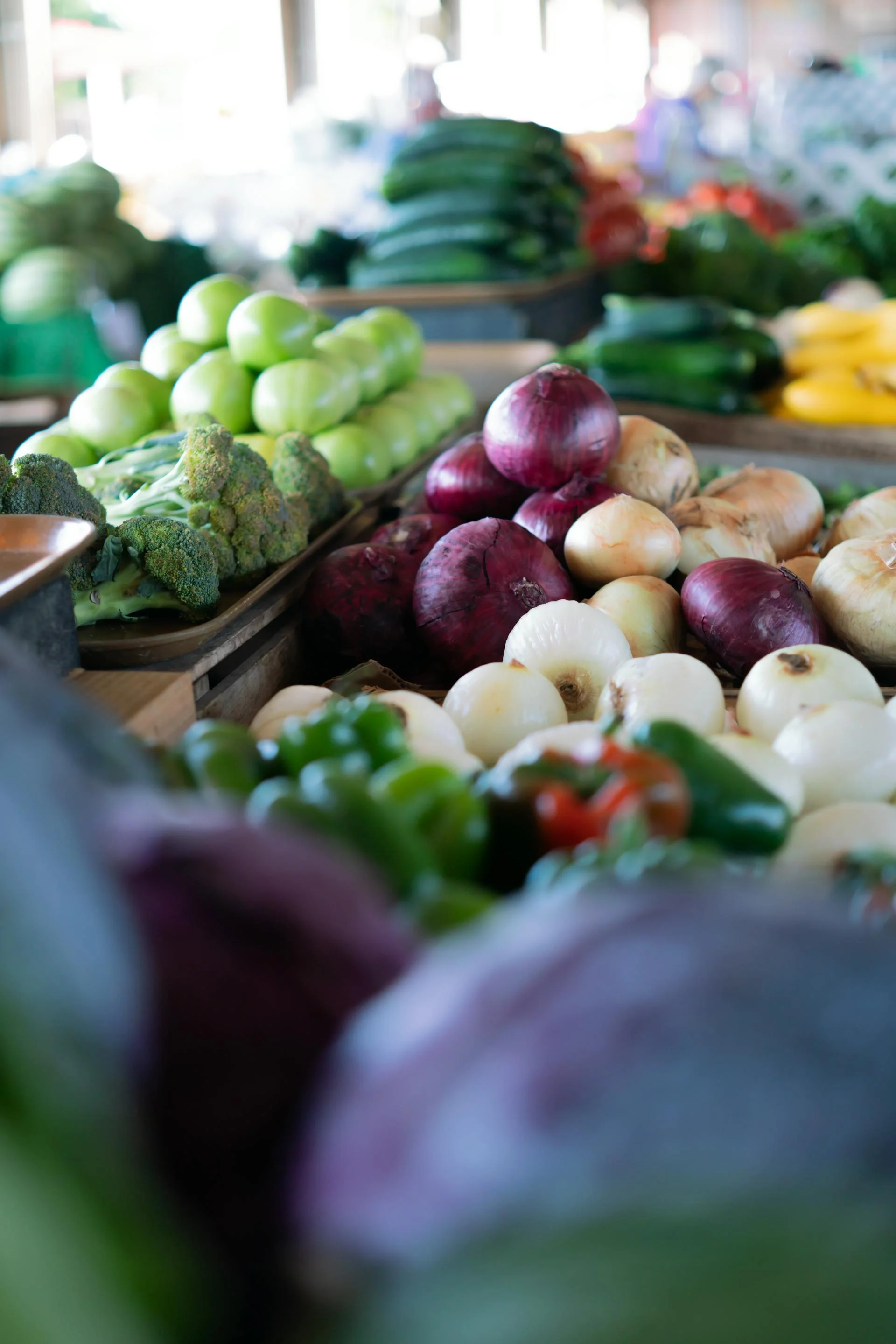
India wastes an estimated 16–18% of its fresh produce between harvest and consumer. Kerala, with its tropical heat, high humidity, and road infrastructure challenges, exceeds that average in several categories. The tragedy is not that the losses happen: it's that the majority are preventable with proper cold chain discipline.
This is not a problem of refrigeration technology. Modern reefer equipment works. The problem is a systematic breakdown in how the cold chain is understood, managed, and maintained at each handoff point.
The chain is only as strong as its warmest link
A cold chain is exactly what it sounds like: an unbroken sequence of temperature-controlled steps from harvest to consumer. The moment any step fails: even briefly: the clock on produce life restarts, and it restarts from a worse baseline than before.
Here's what a typical Kerala fresh produce cold chain looks like, and where it typically breaks:
At the farm gate
Produce is often harvested at peak heat (mid-morning to afternoon) and left in the open before collection. Pre-cooling: the process of rapidly removing field heat from produce: is almost entirely absent from Kerala's smallholder supply chain. Field heat is the single biggest driver of early spoilage: a tomato at 35°C when loaded will lose days of shelf life regardless of what happens next.
The fix is straightforward: forced-air pre-coolers or even shade with good airflow at the collection point. This is infrastructure, not technology. But it is the most high-leverage intervention in the chain.
In primary transport (farm to collection hub)
Most farm-to-hub transport in Kerala is in open vehicles: tempo travellers, auto-rickshaws, or light trucks with no temperature control. This is a structural problem that exists throughout India, and it is not being solved quickly.
Where it IS being solved: for high-value crops like exotic vegetables, flower exports, and premium fruits: temperature-controlled transport at this stage has a measurable impact on quality at destination.
At collection and aggregation hubs
Collection hubs are where the cold chain most often exists on paper but not in practice. A hub may have a cold room installed, but:
- The cold room is not maintained and runs at 15°C instead of 4°C
- Produce waits outside while the cold room is full, or while loading is organised
- Door discipline is non-existent: every door opening spikes the internal temperature
- The cold room's refrigeration unit has not been serviced in 12 months and is running 30% below rated capacity due to condenser fouling
Each of these failures is individually small. Together, they erase most of the benefit of having cold storage at all.
In primary distribution transport
This is where reefer trucks enter the picture. For retail chains, hospital supply networks, QSR chains, and export-grade produce, this leg of the chain is typically managed with some degree of seriousness: contracted reefer vehicles, documented temperature logs, and supplier accountability.
But even here, failures are common:
Pre-cooling the truck: A reefer body that has been sitting in direct sun at 40°C needs 45–60 minutes to reach setpoint temperature before loading. This step is routinely skipped to save time. Loading into a warm truck means the refrigeration unit runs at maximum for hours just catching up: and may never actually reach setpoint if the insulation or refrigeration unit is compromised.
Reefer unit maintenance: Condenser coils on reefer trucks accumulate road dust and biological matter. A fouled condenser reduces cooling capacity by 15–25%, which in Kerala's summer means the unit physically cannot maintain setpoint against the ambient load. This failure is slow and invisible: drivers don't notice until the load arrives damaged.
Insulation integrity: PUF-insulated reefer bodies have a service life. After 5–7 years of Kerala road conditions, door seals degrade, panel joints crack, and the effective thermal barrier is a fraction of the original specification. The refrigeration unit compensates by running continuously: which accelerates its own wear: and eventually cannot compensate at all.
At the retail/restaurant end point
Even when produce arrives in good condition, poor handling at the endpoint loses much of what the cold chain preserved. Walk-in coolers at supermarkets operating at 12°C instead of 4°C. Produce left on loading docks during peak traffic. Cold room doors left open during extended restocking operations.
These are management failures, not equipment failures. But equipment that is not properly maintained makes management failures worse: a cold room that takes 20 minutes to recover temperature after a door opening (due to an undersized or faulty refrigeration unit) is a much bigger problem than one that recovers in 4 minutes.
What the numbers look like
A 5°C rise in storage temperature roughly halves the shelf life of most fresh produce. A tomato with 10 days of shelf life at 4°C has approximately 5 days at 9°C, and 2–3 days at 14°C. For every degree above optimal, you're losing revenue.
For a distribution operation handling 500kg of tomatoes daily in Kerala, operating cold storage at 10°C instead of 4°C means roughly 15–20% more daily waste over the course of a week. At ₹40/kg average, that is ₹3,000–4,000 in avoidable losses per week, per location.
The cost of a properly maintained cold room serviced quarterly is a fraction of this.
The maintenance gap
The central problem in Kerala's fresh produce cold chain is not equipment availability. Cold rooms exist. Reefer trucks exist. The equipment is there.
The problem is that the maintenance culture has not kept pace with the equipment deployment. Cold rooms are installed and forgotten. Reefer trucks accumulate deferred maintenance. The true cost of this: in spoiled produce, rejected loads, and supply chain unreliability: is diffuse and invisible, spread across hundreds of individual loss events rather than appearing as a single line item.
Structured preventive maintenance: quarterly condenser cleaning, annual refrigerant checks, insulation integrity inspection, door seal replacement: converts these diffuse invisible losses into a concrete, predictable maintenance budget that is always smaller.
Why This Matters To HRS
How HRS turns cold-chain theory into working vehicles
For transport bodies, HRS is not only discussing the refrigeration unit. The work usually includes choosing the right body class, getting the insulation and drainage details right, and matching the reefer package to the vehicle and route profile.
Related Service
Reefer Body Fabrication & Transport SolutionsKeep Exploring
Continue from this guide into the matching HRS service page or a relevant Kerala service area.
Related Services
Need expert HVAC help?
Contact our team for professional installation, maintenance, or a custom consultation.