26 July 2025
Cold Chain for Poultry: Why Temperature Control From Farm to Market Matters
Poultry spoilage costs Kerala's food trade crores every year. A closer look at the temperature requirements, cold-chain gaps, and refrigeration solutions that keep chicken safe from slaughterhouse to shelf.
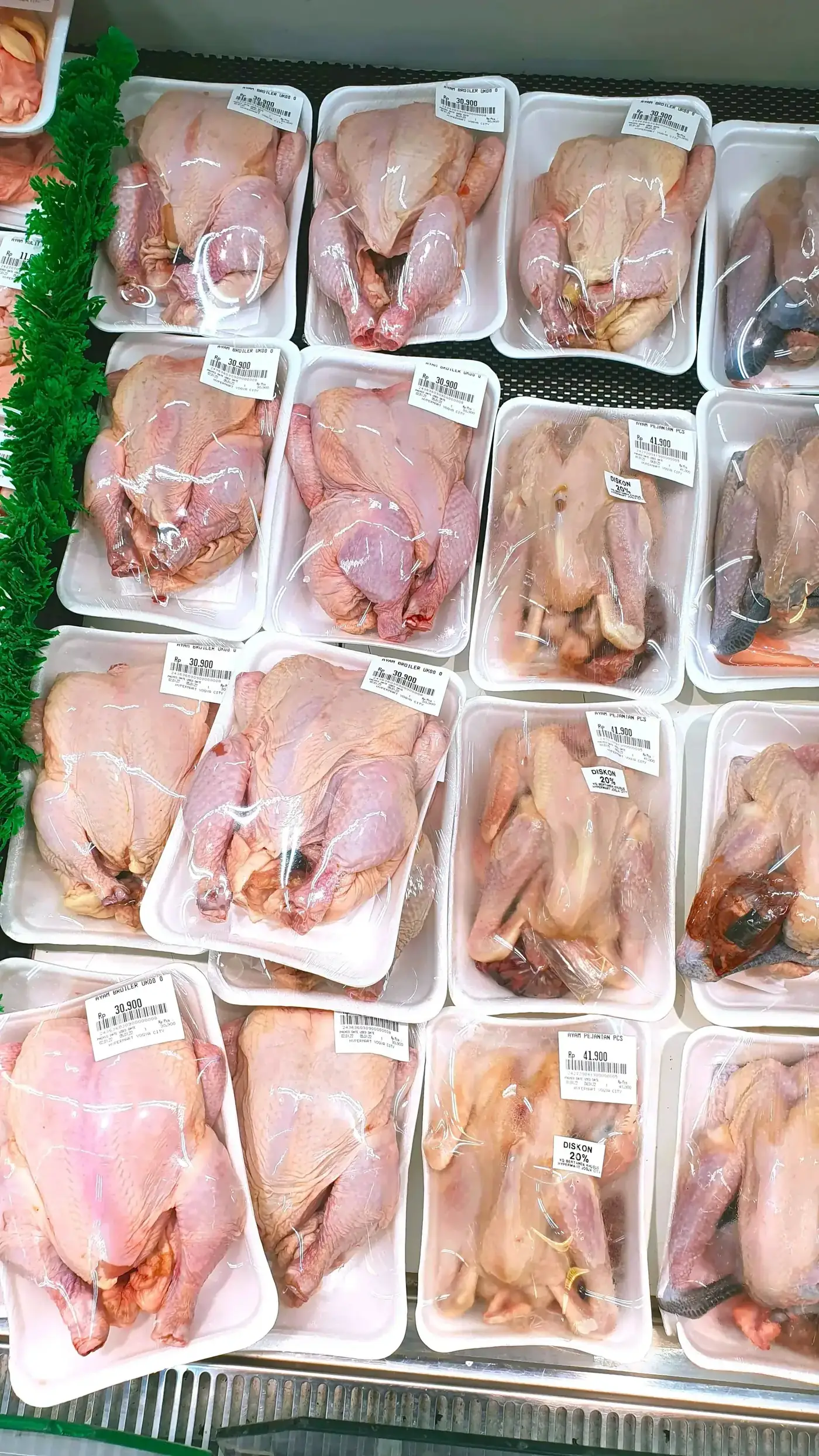
Poultry is one of Kerala's highest-volume protein categories, and it is also one of the easiest to damage through poor temperature control. The problem is not usually at the point of processing. It is in the gaps between processing, transport, retail storage, and final display.
That is where cold-chain discipline breaks down, and where product loss, food-safety exposure, and avoidable margin erosion begin.
For a buyer or operator, the issue is simple. If the chicken leaves the processing facility in good condition but reaches the outlet warmer than it should, the problem is no longer about supply. It is about transport design, handling discipline, and refrigeration quality.
The temperature numbers that matter
Raw chilled poultry should generally be held at or below 4 C during storage and transport. Frozen poultry belongs in a much lower band, commonly around -18 C or below depending on the product and logistics standard being followed.
The risk sits in the middle. Once product spends time in the broader danger zone, bacterial growth accelerates quickly, especially in Kerala's ambient conditions.
Useful working numbers:
- chilled poultry target: 0 C to 4 C
- frozen poultry target: around -18 C
- Kerala ambient working reality in many transport and loading conditions: 30 C to 35 C, often with high humidity
- common last-mile risk window: repeated door openings and non-refrigerated handling over one to three hours
Those figures are enough to explain why so much damage happens outside the processing facility. A product that begins its journey correctly chilled can still arrive compromised if the transport and retail chain is weak.
Where the poultry cold chain usually fails
In practice, the failures are rarely dramatic. They are usually small temperature breaches repeated at the wrong points.
1. Last-mile transport
This is one of the biggest weak spots in the Kerala market. Large supermarket and organised-distribution networks are more likely to use proper refrigerated vehicles. Smaller retailers often are not.
That means the product may leave a processing point correctly chilled, only to spend the last leg in:
- non-refrigerated vans
- partially insulated vehicles
- vehicles that were not pre-cooled before loading
- overloaded cargo bays with poor airflow
By the time the poultry reaches the outlet, core temperature may already have drifted well above the intended holding range.
2. Retail storage
Many smaller outlets still rely on domestic or semi-commercial freezers and improvised storage practice. The unit may appear to be working, but the actual storage temperature may be inconsistent because of:
- weak compressor performance
- poor door sealing
- unstable power
- overloading
- lack of cleaning and preventive maintenance
The problem is not only product temperature. It is the absence of measurement. Many operators do not have reliable logging, alarms, or routine checks, so temperature failure is discovered only after spoilage, smell, texture change, or customer complaint.
3. Display discipline
Display conditions can undo good transport practice very quickly. Open or frequently opened display arrangements allow ambient air to enter continuously. If the case is underperforming or not maintained, the operator may still believe the product is safe because the unit "looks cold".
That is not enough. Poultry display needs controlled, repeatable temperature performance, not visual reassurance.
Why pre-cooling matters more than many operators think
One of the most common operational mistakes is loading product into a cargo space that is still hot. If the reefer body or insulated vehicle has been standing in the sun, the refrigeration unit is forced to cool both the cargo compartment and the product environment at the same time.
That slows pull-down, increases compressor load, and raises the risk of a temperature excursion during the most sensitive first leg of transport.
For poultry movement, pre-cooling is not a nice extra. It is part of basic cold-chain discipline.
Working rule:
- pre-cool the cargo space first
- load only when the compartment is stable at the intended range
- avoid using the reefer as a rescue tool for already-warm product
If the product enters warm, the refrigeration unit is trying to recover a handling failure, not maintain a cold chain.
What a proper poultry transport setup should include
For operators moving poultry consistently, the transport vehicle itself needs to be treated as production infrastructure, not as a general-purpose truck with cooling attached.
The key elements are:
Correct temperature capability
The unit must hold the target band, not just make the vehicle feel cool. For chilled poultry, that means dependable low positive temperatures under actual route conditions.
Proper airflow inside the body
Temperature is not enough on its own. Air distribution matters. If airflow is poor, the vehicle develops hot spots and uneven pull-down. Product near the outlet may be within range while product deeper in the load is not.
Defrost reliability
If the evaporator builds ice and airflow drops, the system may still appear to be running while actual cooling performance deteriorates. Automatic and reliable defrost behaviour matters in continuous fleet use.
Door discipline and seal quality
Every unnecessary door opening is a temperature event. Poor seals make recovery slower and increase operating cost. In a humid climate, seal condition matters more than many operators budget for.
Proper body insulation
A weak reefer body forces the refrigeration unit to work harder all day. That increases fuel or energy use, reduces reliability, and raises the chance of product loss under route delays.
The retail side matters too
Transport alone does not solve the poultry cold chain. Once the product reaches the retailer, storage and display need to protect the temperature discipline established earlier.
For many outlets, the most important investment is not the fanciest cabinet. It is a storage and display setup that is:
- correctly sized for turnover
- easy to monitor
- maintainable by a real service team
- backed by a preventive-maintenance routine
That can include chest freezers, display cases, or small commercial cold storage depending on the format, but the principle is the same: the unit must hold temperature consistently and be serviced before failure, not after.
The business cost of poor cold-chain control
Operators often think about poultry cold chain only in terms of food safety. That is important, but the business case is just as strong.
Working estimate:
- spoilage and returns in poorly controlled poultry movement and storage can easily sit in the low single-digit percentage range across a year
- for a retailer or distributor moving even modest daily volume, that translates into recurring product loss rather than one dramatic event
- once complaints, replacement stock, wasted transport, and reputational damage are added, the true cost is higher than the spoiled kilograms alone suggest
For a small retailer, that may mean steady daily margin loss. For a larger distributor, it can mean repeated leakage across every route and outlet.
The economics usually favour proper refrigeration faster than people expect.
What buyers should ask before investing
If you are procuring or upgrading poultry cold-chain infrastructure, the useful questions are practical:
- what temperature band does the operation really need to hold?
- how long are the routes and how frequent are the door openings?
- is the present vehicle body insulated well enough?
- is the unit sized for the actual load or only for the box volume?
- is the retail storage setup monitored, maintained, and realistic for the daily product volume?
These questions matter more than whether the setup sounds impressive on paper.
Where HRS fits
HRS supports the poultry and broader cold-chain market through reefer body fabrication, transport refrigeration integration, and ongoing service support for fleet operators and temperature-sensitive distribution businesses. That matters because poultry cold chain is not solved by equipment supply alone. It is solved by the combination of:
- a correctly built insulated body
- a correctly selected refrigeration unit
- sensible route and loading discipline
- regular maintenance
- fast support when a unit begins to drift out of performance
For operators moving poultry in Kerala, those are the fundamentals that protect product, margin, and customer trust.
If you are reviewing reefer transport or cold storage for poultry movement, contact HRS to discuss reefer body fabrication and transport refrigeration support.
Why This Matters To HRS
How HRS turns cold-chain theory into working vehicles
For transport bodies, HRS is not only discussing the refrigeration unit. The work usually includes choosing the right body class, getting the insulation and drainage details right, and matching the reefer package to the vehicle and route profile.
Related Service
Reefer Body Fabrication & Transport SolutionsKeep Exploring
Continue from this guide into the matching HRS service page or a relevant Kerala service area.
Related Services
Need expert HVAC help?
Contact our team for professional installation, maintenance, or a custom consultation.