13 December 2025
Bus Air Conditioning Maintenance: A Practical Guide for Fleet Operators
Bus AC systems operate in conditions no comfort AC engineer designs for. Heat, vibration, diesel fumes, and continuous duty cycles demand a very different maintenance approach. Here's what fleet operators need to know.
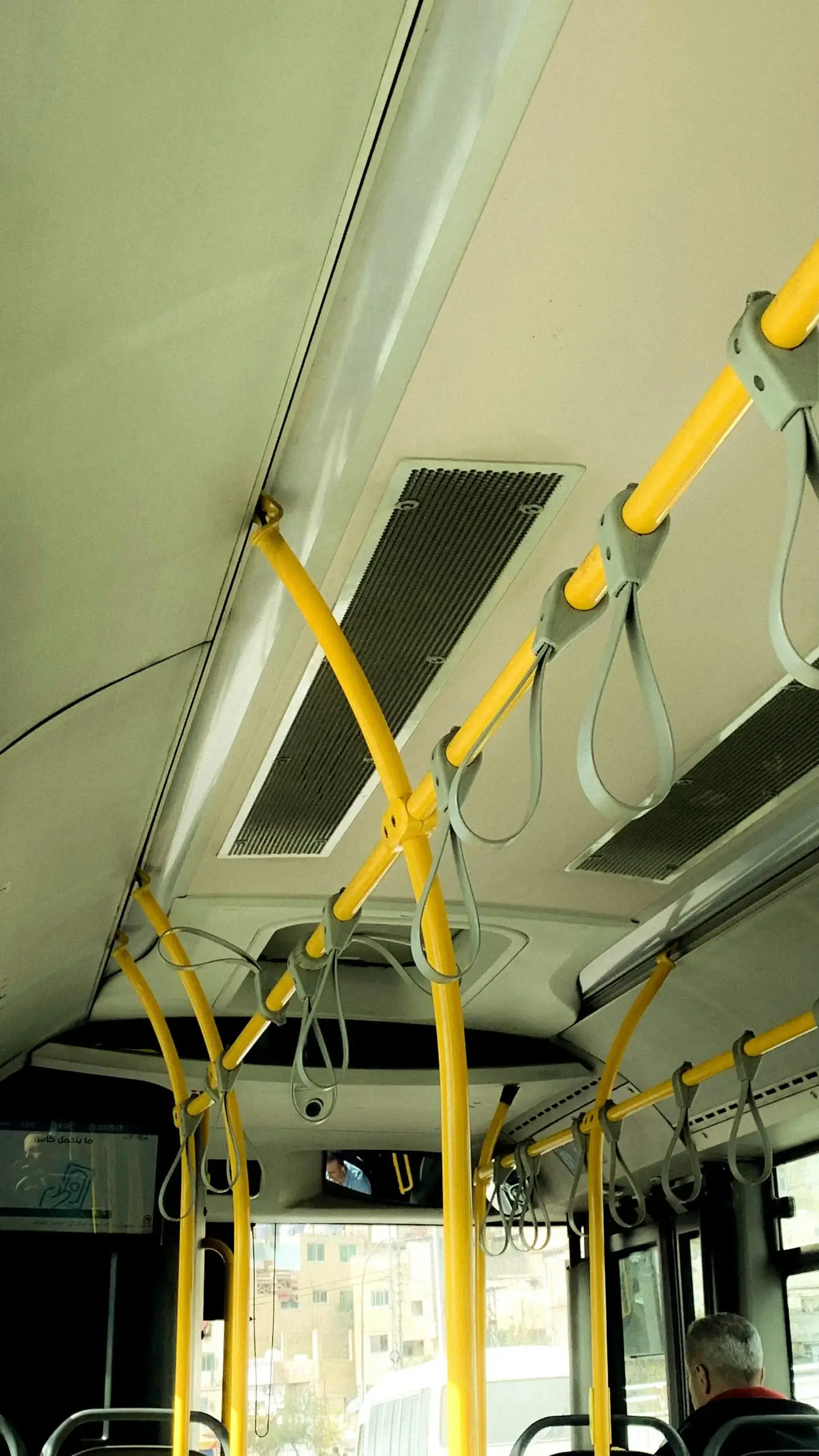
A bus air conditioning system faces conditions that would destroy a residential unit within months. It operates at ambient temperatures of 35–42°C in peak Kerala summer. It endures constant vibration from the road, engine, and generator. It cycles between full load (city traffic, doors opening every 30 seconds) and high-speed highway operation. It must run reliably for 14–18 hours a day, 365 days a year.
Understanding how these systems work: and what they need: is essential for any fleet operator serious about passenger comfort and vehicle uptime.
How bus AC systems differ from building HVAC
Independent refrigeration units
Most bus AC systems: particularly on long-distance and air-conditioned city buses: use self-contained rooftop or underfloor units with their own hermetic compressor, condenser, and evaporator assembly. These are separate from the vehicle's engine and typically driven by an auxiliary power source (belt-driven from the engine, or in some configurations, an independent diesel generator).
This architecture means the AC system can operate independently of engine load and that failures are typically contained: a compressor failure doesn't affect the vehicle's driveability. But it also means two separate mechanical systems (vehicle and AC) both require maintenance discipline.
Vibration and mechanical stress
Road vibration is the primary enemy of bus AC components. Compressor mountings loosen. Refrigerant line connections work themselves open over thousands of kilometres. Condenser fins vibrate and crack. Electrical connections corrode and fail from constant micro-movement. A bus AC system that is not physically inspected: not just functionally tested: every 3 months is accumulating unreported damage.
Condenser airflow challenges
Building HVAC condensers reject heat into ambient air and can be located in shaded, ventilated plant rooms. Bus condensers operate in direct sunlight, at ambient temperatures up to 45°C, with airflow that varies from near-zero in city stop-start traffic to maximum at highway speeds. Condenser fouling from road dust and diesel particulates is significantly faster than in stationary installations.
A bus condenser operating at 10% reduced capacity due to fouling works its compressor harder, runs at higher discharge pressures, and significantly shortens compressor life.
Preventive maintenance schedule
Monthly (or every 10,000 km, whichever is sooner)
- Condenser coil inspection and cleaning: compressed air or low-pressure water wash depending on fouling level
- Evaporator drain pan and drain line inspection: accumulated biological growth in drain pans is a common cause of unpleasant passenger odours
- Blower motor inspection: check for unusual noise, verify airflow volume at all speed settings
- Refrigerant sight glass check: bubbling at normal operating temperature indicates low charge
- Belt tension check on belt-driven systems: belts stretch and slip with heat cycling
Every 3 months (or 30,000 km)
- Full physical inspection of refrigerant lines and connections: look for oil staining at joints (indicating refrigerant/oil leak), check mounting clamps and vibration isolators
- Electrical connection inspection: clean and re-torque all main power connections, check for chafing on cable runs
- Compressor oil level check (where accessible)
- Cabin temperature performance test: measure supply air temperature at all vents, verify consistent cooling across the vehicle length
- Filter replacement or deep cleaning
Annually
- Full refrigerant charge verification (manifold gauge test)
- Compressor current draw measurement: elevated current indicates mechanical wear or electrical issues before they become visible failures
- Complete coil cleaning with coil cleaner chemical, not just air/water wash
- Review service records for repeat faults: recurring problems indicate underlying issues, not random failures
Common failure modes and early warning signs
Reduced cooling performance: Most commonly caused by condenser fouling, low refrigerant charge, or blower motor degradation. All three are gradual and progressive, making it easy for operators to normalise declining performance. Set a baseline measurement (cabin temperature at highway speed in direct sun) and monitor against it.
Compressor short-cycling: Compressor starts and stops frequently without achieving cabin temperature. Indicates low refrigerant charge, a defective pressure switch, or a condenser so fouled that discharge pressure trips the high-pressure cutout.
Unusual noise from compressor or blower: Grinding, rattling, or squealing from any rotating component is an early warning that should be investigated immediately. The cost of a bearing replacement is a fraction of the cost of a seized compressor or blower motor.
Ice formation on evaporator: Visible icing or unusually restricted airflow from vents indicates either extremely low refrigerant charge or a blower motor failure. Do not continue operating: ice formation accelerates moisture damage to evaporator components.
Water leaks inside cabin: Almost always a blocked drain line. Debris accumulation, algae growth, or a misaligned drain tray cause condensate to back up and overflow. Left unaddressed, water intrusion damages floor materials, seating, and electrical looms.
Refrigerant considerations
The industry is mid-transition from R-22 (now phased out) and R-407C to R-32 and R-454B. KSRTC's fleet modernisation programme: which HRS has supported: uses R-32 for improved energy efficiency and lower global warming potential.
Fleet operators running older vehicles should check which refrigerant their AC units use. R-22 is no longer legally available for top-up in India. If your vehicles still use R-22, a retrofit or replacement is overdue.
Documentation and fleet management
For multi-vehicle fleets, maintenance record-keeping is as important as the maintenance itself. Aggregated data across a fleet reveals patterns invisible in individual vehicle records: which vehicle type has the highest AC failure rate, which route conditions are most damaging, which components drive the majority of maintenance costs.
Fleets that treat AC maintenance as a documented, data-driven programme rather than a reactive repair activity consistently achieve lower per-kilometre cooling system costs and better passenger satisfaction outcomes.
Why This Matters To HRS
How HRS applies this in bus AC work
HRS runs bus air-conditioning as a specialist fleet activity, not as an extension of building AC service. That means diagnosis, parts logic, airflow understanding, and service planning are built around vehicle-duty conditions.
Related Service
Bus Air Conditioning SystemsKeep Exploring
Continue from this guide into the matching HRS service page or a relevant Kerala service area.
Related Services
Need expert HVAC help?
Contact our team for professional installation, maintenance, or a custom consultation.